What type of game is The Blood of Dawnwalker?
It is a single-player, third-person, open-world action RPG with an authored protagonist, nonlinear quests, and consequential choices.
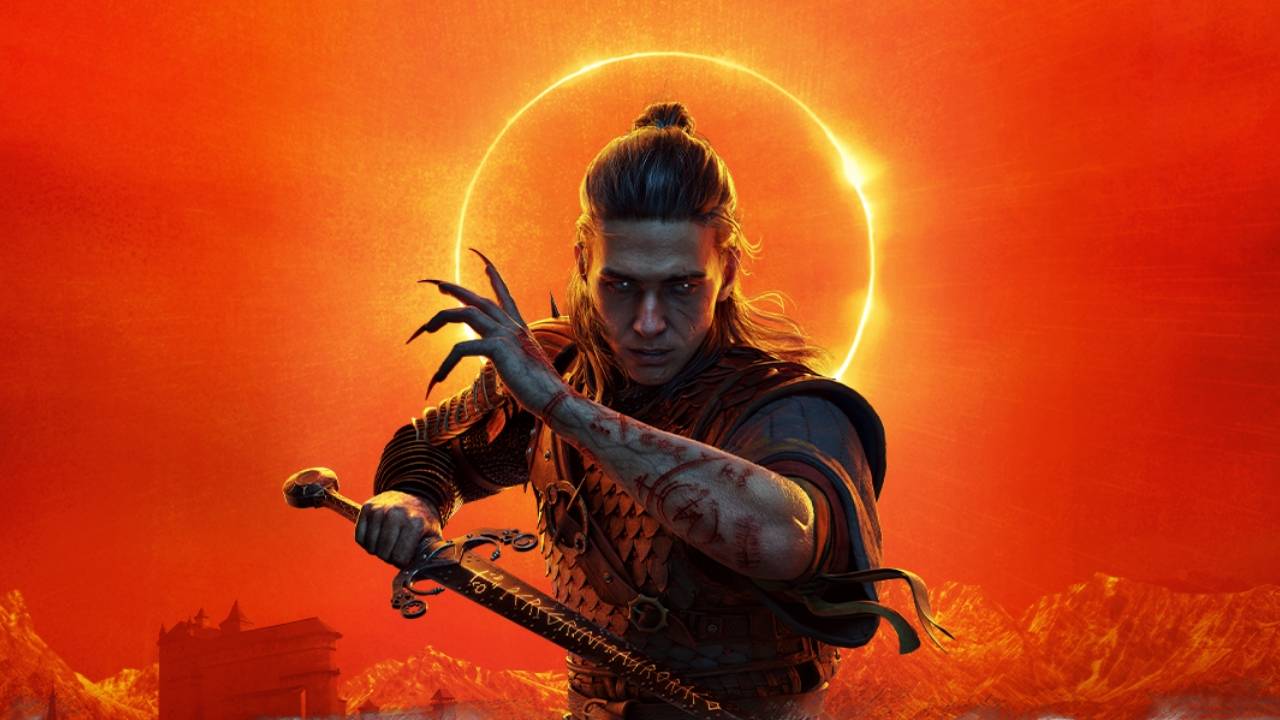
The Blood of Dawnwalker
The Blood of Dawnwalker is a single-player open-world action RPG where Coen fights as a human by day and a vampire by night. Directional combat, form-specific skills, quests, and a 30-day narrative resource shape each run.
The Blood of Dawnwalker is a third-person, single-player action RPG built around two versions of Coen. By day he is human, relying on directional swordplay and Witchcraft. At night he becomes a vampire with claws, feeding, supernatural powers, and different traversal routes. The world remains open, but selected actions spend portions of a 30-day narrative resource.
The game is not a character-creation sandbox or a fixed sequence of main missions. Coen is an authored protagonist whose abilities, morality, relationships, and story route change through player decisions.
Human combat combines directional attacks, blocks, perfect blocks, dodges, and sword techniques. Witchcraft adds magical options. Reading enemy direction and timing matters more than repeatedly using one attack, especially when several opponents can pressure the camera and lock-on system.
The launch version includes adjustable difficulty and individual combat assists. Players struggling with the directional system can change enemy health, aggression, perfect-block timing, and automatic blocking instead of abandoning a story route. The combat guide covers those fundamentals without claiming one universal build.
At night Coen gains Vampirism abilities and a more mobile, predatory playstyle. Official demonstrations show claws, feeding, Shadowstep, Planeshift, and vertical movement. Later progression can expand faster traversal. These powers draw on a different skill tree from Swordmastery and Witchcraft.
Night is not merely a colour filter. Form-specific abilities can change how Coen enters a location, reaches an objective, or handles a fight. If a route appears inaccessible during the day, returning after the transformation may reveal another approach.
The released game has three skill trees: Swordmastery, Witchcraft, and Vampirism. Abilities and passive bonuses support different mixes rather than forcing a pure human or pure vampire class. Some learning actions carry an in-game time cost, so progression also interacts with the story calendar.
Use the skills guide to understand the three trees before spending rare resources. Early “best build” claims remain patch-sensitive, so this site separates verified mechanics from recommendations.
Coen has 30 in-game days to save his family, but the timer does not run continuously while you explore. Actions that advance time are marked with an hourglass and show their cost. This allows scouting, gathering, and route planning without turning the open world into a real-time race.
The deadline still matters because you cannot pursue every opportunity without trade-offs. Quests can be skipped, missed, or completed in a different order, and inaction may change the world. See the time system guide for planning rules.
Vale Sangora is divided into ten mapped regions around Svartrau. Shrines create the fast-travel network; each destination must be activated, and desecrated Shrines need restoration. Coen has no horse, so Shrines and form-specific movement are the main long-distance tools.
Rebel Wolves does not frame every objective as a rigid main-versus-side hierarchy. The walkthrough hub groups the released quest information while preserving the freedom to choose an order.
Characters remember decisions, relationships can develop into three documented romance routes, and major actions can alter later opportunities. Multiple endings are available. Use manual saves before expensive or clearly consequential choices if you want to inspect alternatives without replaying a long stretch.
Last updated: 4 September 2026
The released game confirms three skill trees, Shrine fast travel, manual saves, granular difficulty options, and the nonlinear narrative sandbox.
It is a single-player, third-person, open-world action RPG with an authored protagonist, nonlinear quests, and consequential choices.
Ordinary exploration does not continuously spend time. Marked quest, dialogue, and training actions show an hourglass cost before time advances.
Yes. Coen uses swordplay and Witchcraft as a human, while his night form uses Vampirism abilities, claws, feeding, and supernatural traversal.
References